

Siemens Others
Why Choose Bright Trading Enterprise Co., Ltd?
Bright Trading Enterprise Co., Ltd is an enterprise that specializes in selling various series of instruments and meters of Rosemount and Yokogawa brands. Provide customers with high-quality products and after-sales service in transmitter, flowmeter and control module.
Rich Experience
Our company has nearly 6 years of rich export experience, the supply channel is stable and has guaranteed delivery time.
Professional Service
Our freight forwarder owns channels to handle branded products and battery products. We provide door-to-door express delivery services to our customers.
Wide Product Range
We specialize in ROSEMOUNT, YOKOGAWA, HONEYWELL, SIEMENS, ABB, Schneider, AB and FISHER products. The main customers are in the Middle East, Southeast Asia, Africa and European countries.
Competitive Price
Our products are of high quality and affordable. These three products, including Rosemount 3051 Series Transmitter, Yokogawa EJA EJX Series Transmitter, Honeywell Series Transmitter, have price advantages compared with similar products on the market.
-
3UF7930-0AA00-0
Connecting cable Length 0.025 m, flat, for connection of basic unit with extension modules via the
-
3UF7935-0AA00-0
Connecting cable Length 0.3 m, flat, for connection of basic unit, current measuringmodule,
-
3RU2136
Product Brand Name:SIRIUS. Product Type Designation;3RU2. Product Designation:Thermal overload relay
-
3UF7101-1AA00-0
CURRENT MEASURING MODULE. SET CURRENT 2,4...25A. OVERALL WIDTH 45MM. STRAIGHT-THROUGH CT
-
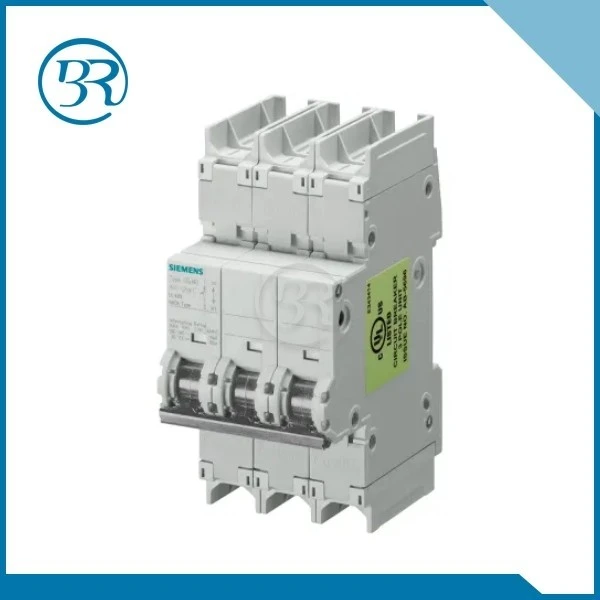
5SY6316-6
Miniature circuit breaker 400 V 6kA, 3-pole, B, 16A, D=70 mm
-
5SY4104
Miniature circuit breaker. 230/400 V 10kA, 1-pole. A,4A,D=70 mm
-
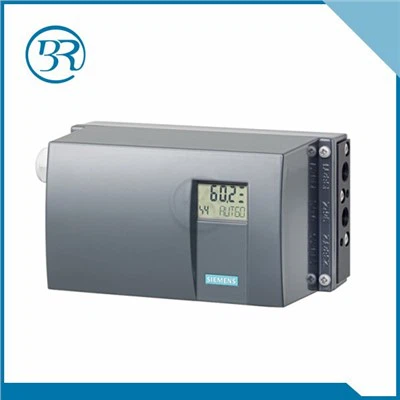
6DR5020-0NG00-0AA0
SIPART PS2 smart electropneumatic positioner for pneumatic linear and part-turn actuators; 2-wire;
-
3WL9111
accessories circuit breaker 3WL locking device against traversing of circ. breaker In sep. position



A circuit breaker is an electrical safety device designed to protect an electrical circuit from damage caused by overcurrent. Its basic function is to interrupt current flow to protect equipment and to prevent the risk of fire. Unlike a fuse, which operates once and then must be replaced, a circuit breaker can be reset (either manually or automatically) to resume normal operation.
Circuit breakers are made in varying sizes, from small devices that protect low-current circuits or individual household appliances, to large switchgear designed to protect high voltage circuits feeding an entire city. The generic function of a circuit breaker or fuse, as an automatic means of removing power from a faulty system, is often abbreviated as OCPD (Over Current Protection Device).
Features of Siemens Circuit Breaker

Safety
Circuit breakers are designed to prevent electrical fires and protect against electric shock. They are equipped with a variety of safety features, including overcurrent protection, short-circuit protection, and arc suppression.

Versatility
Circuit breakers are available in a wide range of types, sizes, and configurations to suit different applications and power ratings. They can be used in residential, commercial, and industrial settings, and are suitable for low-voltage and high-voltage power systems.
Reliability
Circuit breakers are highly reliable and can operate for years without requiring maintenance. They are designed to withstand frequent switching cycles and can handle a variety of electrical loads.

Emergency Shut-off
In the event of an electrical fault, circuit breakers provide an emergency shut-off function that cuts off power to the affected circuit or the entire system. This helps prevent further damage and keeps the system safe.

Compatibility
Circuit breakers are compatible with a variety of other electrical components and can be easily integrated into existing electrical systems. They are also compatible with different types of fuses and other protective devices.

Smart Features
Modern circuit breakers are equipped with smart features like remote monitoring and control, predictive maintenance, and fault detection. These features help improve system performance, reduce downtime, and lower maintenance costs.
Types of Siemens Circuit Breaker
It is possible to classify the circuit- breakers considering multiple criteria.

Use Function
• Distribution circuit- breakers. They protect the conductors that connect the distribution panel with another point of the installation.
• Consumer circuit- breakers. In this case, the protection is direct, since it is located as close as possible to the load.
The Type of Use
• Domestic use. It must comply with standard 60898 or an equivalent standard.
The Type of Construction
• Circuit- breakers. They are more robust than miniature circuit- breakers, they are used for currents up to around 1000 A.
• Air circuit- breakers. Its use applies to the highest currents, up to around 6300 A.
Air Circuit Breaker
SF6 Circuit Breakers
The free electrons are then absorbed with the aid of the use of manageable SF6, ensuing in immobile horrific ions. For the arc to extinguish completely, the medium’s insulating electrical power is increased. Both the contacts and transferring contacts are positioned in the arc chamber alongside the gas every day.
Vacuum Circuit Breakers
Oil Circuit Breakers
Low Voltage Circuit Breakers
Benefits of Siemens Circuit Breaker
Make Enough Electrical Current Available
Electrical current requirements for major appliances are far higher than those for lighting and other minor appliances. Your home’s electrical system would be immediately overloaded if you connected your dishwasher or electric range to a standard electrical outlet. You can make sure your device receives enough electrical current with a dedicated circuit without having to worry about overcharging the other outlets in your home.
Eliminate Electrical Safety Risks
Installing dedicated circuits all around your house can help to keep your electrical system safe and secure. An appliance may put your home at risk for an electrical fire if it is connected to a standard circuit rather than a dedicated one. You’ll feel more at ease after your new appliances are installed if you invest in dedicated circuits.
Observe the National Electrical Code
The National Electric Code mandates that all major appliances be wired to separate circuits. To avoid violating the National Electric Code and paying high fines, create separate circuits before adding your next appliance. The National Electric Code was created to make sure that all residential and commercial properties are protected from electrical safety threats.
Application of Siemens Circuit Breaker

Replacement of Fuse
Compared to another switchgear-like fuse, a circuit breaker is smaller in size and can be automatically reset for repeated operation. Fuses are made up of metal and are placed in the circuit for protection. Whenever heavy current flows through the circuit, the fuse melts or blows up. A fuse can be used only one time and cannot be reset post-repair of faults in the circuit. Every time a new fuse must be added to the circuit for a one-time operation. Moreover, fuses have slow capabilities to determine the time to start operation and are used for low-voltage applications. On the other hand, circuit breakers are fast enough to operate in faulty conditions. A circuit breaker can be automatically reset post-repair of the circuit and ensures continuous supply. Using a circuit breaker instead of a fuse eliminates the cost of replacement, saves time, and enables high-voltage operation.
Circuit Breaker As a Switch
The circuit breaker can also act as a switch that manually turns on and turns off the power supply to electrical equipment in the power system. It can be used as a switch to manually turn on and turn off the supply for repair or replacement purposes. When power system components like transformers, coils, and other equipment or circuit breakers need to be repaired or replaced, a circuit breaker isolates those components. A circuit breaker breaks the current flowing to the device and disconnects the device for further procedures. Post repair or replacement, circuit breakers can be switched on for regular operation. A normal switch cannot be used in faulty conditions because it needs a manual turn-off. One cannot judge that the overcurrent flow has passed design limitations. Circuit breaker automatically “senses” overcurrent and breaks the circuit immediately.

How to Choose Siemens Circuit Breaker
Rated Operating Voltage (UE): It is the voltage at which the circuit- breakers operates in the conditions of the installation without disturbance. It is common that the circuit- breakers have different rated voltage ranges, with different behaviors between them, as well as voltage values in case of disturbances in the installation.
Rated Current (IN): It is the maximum current value that can indefinitely circulate by a circuit breaker, without exceeding the admissible temperature values of the current carrying components.
Adjustment of the Thermal Trip Current (ITH): It is the current above which the circuit breaker will trip in case of overload.
Adjustment of the Magnetic Trip Current (IM): It is the current above which the circuit breaker will trip in the event of a short circuit. Sometimes this current is defined according to the type of tripping curve.
The Breaking Capacity: The breaking capacity is the value of the expected short-circuit current that a switching device is capable of interrupting under a given voltage. The correct choice of a circuit-breaker has to be made according to the values defined in the IEC 60947-2: Icu (ultimate breaking capacity) and Ics (service breaking capacity). This value must be greater than the maximum short-circuit current expected at the point of installation. It may be lower if an upstream guarantees adequate breaking capacity through manufacturer cascading tables.
How to Maintain Siemens Circuit Breaker
Like all machines, a circuit breaker will require proper care to ensure it continues operating at peak performance. One of the best ways to achieve this is by regularly maintaining the unit. Here are a few things to keep in mind for each maintenance period, which should be at regular intervals, a couple of times per year at minimum.
The first thing to do is to check to see that the insulation inside the unit is dry, as wet insulation is not only less effective but is a breeding ground for mold. A handheld vacuum can be used to clean it or a lint-free rag or towel will work. You’ll also want to check all the parts for potential damage.
The next step is to check the contacts to make sure that they have no signs of rust or damage. If you have access to a micro-ohmmeter, you should also check to make sure that the contacts are still functioning properly. Finally, you’ll want to ensure everything has the correct alignment.
Most importantly, the machine should be checked for dryness, except the operating mechanism, which should be properly lubricated.
How does Siemens Circuit Breaker Work
An AC motor is connected through a C/B to a voltage source. A complete path for current exists between the voltage source and the motor when the C/B is closed. Similarly opening the C/B breaks the path of current flow and the motor stops.
When there is any fault, the C/B automatically opens and once the fault has been discovered and fixed, the C/B can be closed, allowing the motor to operate. Whenever the load current increases the contacts of C/B open and there is an Arc which is established between the separating contacts in C/B.
Arc helps in bridging the contact gap through which the current gets a low resistive path to flow and hence there is no sudden interruption of current which prevents abnormal switching of the voltage. Arc provides a conductive path of electricity and the Arc is quenched as quickly as possible.
How to test a Siemens Circuit Breaker?
There are multiple ways to test a circuit breaker using an analyzer, ohm-meter, multimeter, and many more devices. Each type of circuit breaker operates differently and requires different tests. Several tests like the mechanical test, thermal test, dielectric test, short-circuit test, voltage test, and resistance test. The correct method must be chosen by a certified electrician or an engineer for safety purposes. However, one can test circuit breakers for the potential difference with a digital multimeter.
The general test for a circuit breaker
- Step 1: Dry all the areas near the electric panel. Clean the wet floor as well and wait for a few minutes.
- Step 2: Open the electric panel and choose the circuit breaker for the test.
- Step 3: Uncover the circuit breaker using a screwdriver.
- Step 4: Turn off the power supply for all the devices and appliances in association with the circuit breaker.
- Step 5: Put the multimeter settings to “AC voltage”.
- Step 6: Touch the red lead of the multimeter to the circuit breaker terminal screw (hot wire) and the other black lead to the ground screw.
- Step 7: If the potential difference is zero, the circuit breaker is faulty and needs a replacement.
- Step 8: Change the multimeter settings to ohm (resistance).
- Step 9: Touch one lead of the multimeter to the supply and another to the screw.
- Step 10: The resistance reading should be zero at the time of turn-off. A value of resistance indicates a faulty circuit breaker that needs a replacement.

Ultimate FAQ Guide to Siemens Circuit Breaker
Q: What is a circuit breaker?
Q: What is the purpose of a circuit breaker?
Q: How does a circuit breaker work?
Q: What are the types of circuit breakers?
Q: What is a miniature circuit breaker?
Q: What is a molded case circuit breaker?
Q: What is an air circuit breaker?
Q: What is a hydraulic-magnetic circuit breaker?
Q: What is the difference between a circuit breaker and a fuse?
Q: What is the maximum current rating for a circuit breaker?
Q: What is a single pole circuit breaker?
Q: What is the difference between a circuit breaker and a surge protector?
Q: What is a double pole circuit breaker?
Q: How to replace a circuit breaker?
Q: What is meant by a circuit breaker coordinated system?
Q: What are circuit breaker accessories?
Q: What is the difference between a main breaker and a branch circuit breaker?
Q: Which circuit breaker is mostly used?
Q: Can I use circuit breaker as a switch?
Q: What not to do with a circuit breaker?
As one of the most professional siemens others manufacturers and suppliers in China, we're featured by quality products and competitive price. Please rest assured to buy or wholesale siemens others for sale here and get pricelist from our factory. Contact us for customized service.
Siemens Others, 3WL9111-0BA81-0AA0, Siemens 6DR5020 Positioner