

How to program the motion control functions in ABB PLC?
As a trusted supplier of ABB DCS/PLC systems, I've witnessed firsthand the transformative power of these technologies in industrial automation. One of the most critical aspects of ABB PLC programming is motion control, a feature that enables precise and efficient movement of machinery. In this blog post, I'll share my insights on how to program motion control functions in ABB PLCs, drawing on my years of experience in the field.
Understanding the Basics of Motion Control in ABB PLCs
Motion control in ABB PLCs involves the manipulation of motors and actuators to achieve specific movement profiles. This can range from simple linear movements to complex multi - axis coordinated motions. To program motion control, you first need to understand the key components involved:
1. Drive Systems
ABB offers a wide range of drive systems that work in tandem with PLCs. These drives convert electrical power into mechanical motion and are responsible for controlling the speed, torque, and position of motors. For instance, the ABB INNIS21 is a reliable option that provides high - performance motor control, with features like precise speed regulation and dynamic response.
2. Sensors
Sensors play a crucial role in motion control by providing feedback on the position, speed, and acceleration of moving parts. Encoders, for example, are commonly used to measure the rotation of motors, allowing the PLC to accurately monitor and adjust the motion. Various types of sensors can be integrated with ABB PLCs, and choosing the right one depends on the application requirements.
3. PLC Hardware and Software
ABB PLCs come in different models, each with varying capabilities and input/output (I/O) configurations. The software used for programming, such as ABB's Rapid programming language for some of its robotic systems or the Structured Text (ST) and Function Block Diagram (FBD) languages in general PLC programming, provides the tools needed to develop motion control algorithms.
Steps to Program Motion Control Functions
Step 1: System Design and Planning
Before writing any code, it's essential to have a clear understanding of the motion control requirements. Define the movement profiles, such as the desired speed, acceleration, and deceleration rates. Consider the number of axes involved and how they need to be coordinated. For example, in a pick - and - place application, the X, Y, and Z axes need to work together precisely.
Step 2: Hardware Configuration
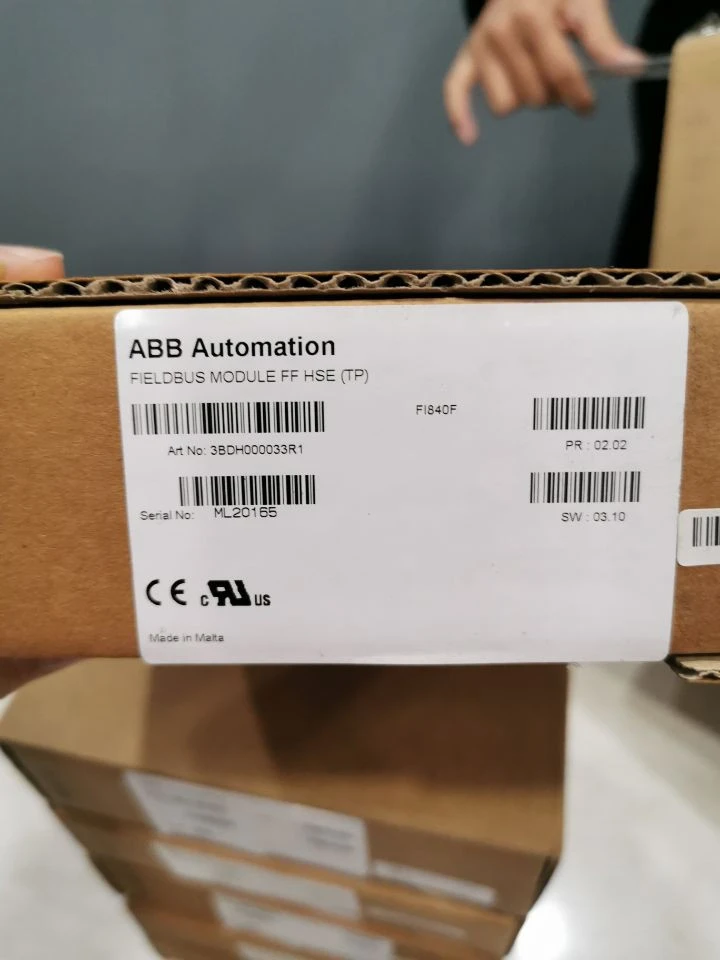
Connect the drives, motors, and sensors to the ABB PLC. Ensure that the I/O modules are properly configured to handle the signals from the sensors and send appropriate commands to the drives. For example, the ABB FI840F can be used for communicating with field devices over a fieldbus network, facilitating smooth data transfer between the PLC and the drive systems.
Step 3: Software Setup
Open the programming software for the ABB PLC. Create a new project and configure the necessary parameters, such as the communication settings and the I/O mapping. Familiarize yourself with the programming environment and the available motion control libraries and functions.
Step 4: Writing the Motion Control Program
- Initialization: Start by initializing the drives and sensors. This may involve setting the initial position, enabling the drives, and calibrating the sensors.
- Defining Motion Profiles: Use the programming language to define the motion profiles. For example, in Structured Text, you can use variables and mathematical functions to calculate the speed and position at different points in time.
- Axis Coordination: If you have multiple axes, write code to coordinate their movements. This may involve using synchronization functions or algorithms to ensure that the axes move in harmony.
- Error Handling: Implement error - handling routines to detect and respond to any issues that may occur during motion control, such as over - current, over - temperature, or sensor failures.
Step 5: Testing and Debugging
Once the program is written, test it on a test bench or in a simulated environment. Monitor the performance of the motors and sensors, and check if the motion profiles are being followed accurately. Use the debugging tools provided by the programming software to identify and fix any errors in the code.
Advanced Motion Control Techniques
1. Motion Trajectory Planning
For more complex applications, motion trajectory planning is essential. This involves calculating the optimal path for the moving parts to follow, taking into account factors such as the shortest distance, the maximum speed, and the available space. ABB PLCs support advanced algorithms for trajectory planning, allowing for smooth and efficient motion.
2. Adaptive Motion Control
Adaptive motion control adjusts the motion parameters in real - time based on the feedback from the sensors. This is useful in applications where the load or the environment changes dynamically. For example, in a robotic arm that picks up objects of different weights, adaptive motion control can ensure that the arm moves smoothly and accurately regardless of the load.
Real - World Applications of ABB PLC Motion Control
- Manufacturing Automation: In manufacturing plants, ABB PLC - based motion control is used to automate processes such as assembly, welding, and material handling. The precise control of motors and actuators improves productivity and quality.
- Packaging Machinery: Motion control functions in ABB PLCs enable high - speed and accurate packaging operations, such as filling, sealing, and labeling.
- Robotics: ABB robots, controlled by PLCs, are widely used in industries for tasks that require dexterity and precision, such as pick - and - place, palletizing, and quality inspection.
The Importance of Technical Support and Training
Programming motion control functions in ABB PLCs can be a complex task, especially for those new to the technology. That's why it's important to have access to reliable technical support. As an ABB DCS/PLC supplier, we offer comprehensive technical support to our customers. Our team of experts can assist with system design, programming, and troubleshooting.
In addition to technical support, training is also crucial. We provide training programs that cover the fundamentals of ABB PLC programming, with a focus on motion control. These programs are designed to help engineers and technicians gain the skills and knowledge needed to develop and implement effective motion control solutions.

Conclusion
Programming motion control functions in ABB PLCs is a powerful way to enhance the performance and efficiency of industrial machinery. By understanding the basics, following the programming steps, and exploring advanced techniques, you can develop customized motion control solutions that meet the specific needs of your applications.
If you're looking to incorporate ABB DCS/PLC motion control systems into your projects, or if you have any questions about programming or technical support, we're here to help. Contact us to start a discussion about your requirements and explore how our solutions can add value to your business.
References
- ABB PLC Programming Manuals
- Industrial Automation Textbooks on Motion Control
- Case Studies of ABB PLC Motion Control Applications