

Can ABB PLCs be used in the chemical industry?
Hey there! As an ABB DCS/PLC supplier, I often get asked if ABB PLCs can be used in the chemical industry. Well, let me tell you, the answer is a resounding yes! In this blog, I'll dive into why ABB PLCs are a great fit for the chemical industry, their features, and how they can benefit chemical plants.
First off, let's understand what PLCs are and why they're important in industrial settings. PLC stands for Programmable Logic Controller. It's a ruggedized computer system that controls industrial processes, like machinery on a factory assembly line or processes in a chemical plant. PLCs are designed to withstand harsh environments, have high reliability, and are easy to program and maintain.
Now, why are ABB PLCs particularly well - suited for the chemical industry?
Safety and Reliability
The chemical industry is all about safety. Chemical processes often involve hazardous materials, high pressures, and extreme temperatures. A single malfunction can lead to catastrophic consequences, like explosions, chemical spills, or environmental damage. ABB PLCs are built with safety in mind. They have redundant systems, fault - tolerant architectures, and advanced diagnostic capabilities.
For example, the ABB INNIS21 is a high - performance input/output module that can handle a wide range of signals. It has built - in self - diagnostic features that continuously monitor its own operation. If a fault is detected, it can quickly isolate the problem and take corrective actions, like shutting down a process safely. This helps prevent accidents and ensures the continuous operation of chemical plants.
Precision and Control
Chemical processes require precise control of variables such as temperature, pressure, flow rate, and chemical composition. ABB PLCs offer high - precision control algorithms and fast processing speeds. They can accurately measure and control these variables in real - time, ensuring that chemical reactions occur under the right conditions.
Let's say you're running a chemical reactor. The temperature needs to be maintained within a very narrow range for the reaction to proceed correctly. An ABB PLC can continuously monitor the temperature and adjust the heating or cooling systems accordingly. This level of precision helps improve the quality of the chemical products and reduces waste.
Flexibility and Scalability
The chemical industry is constantly evolving. New processes are developed, and existing plants need to be upgraded or expanded. ABB PLCs are highly flexible and scalable. They can be easily integrated with other systems, such as sensors, actuators, and human - machine interfaces (HMIs).
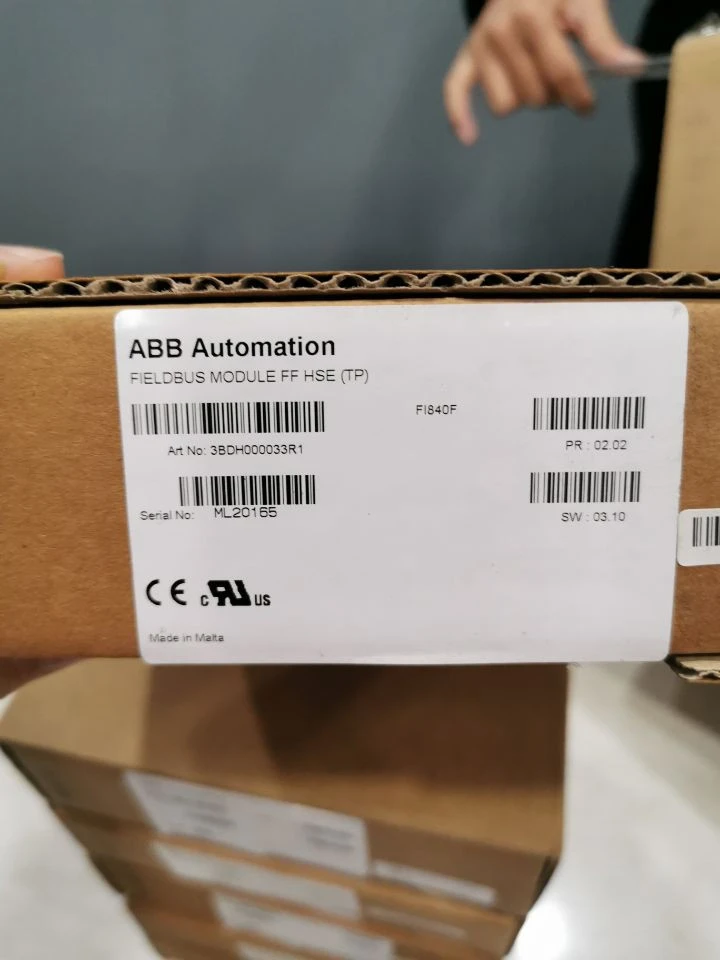
Whether you have a small - scale chemical laboratory or a large - scale industrial plant, ABB PLCs can be customized to meet your specific needs. You can start with a basic system and gradually add more modules and functionality as your plant grows. The ABB FI840F is a fieldbus module that provides a flexible and cost - effective way to connect various field devices to the PLC system. It supports multiple communication protocols, making it easy to integrate with different types of equipment.
Communication and Connectivity
In today's digital age, connectivity is crucial. ABB PLCs support a wide range of communication protocols, such as Ethernet, Modbus, and Profibus. This allows them to communicate with other systems in the plant, as well as with remote monitoring and control centers.
For instance, you can use ABB PLCs to collect data from various sensors in the chemical plant and transmit it to a central control room. Operators can then monitor the process parameters in real - time, make informed decisions, and even control the processes remotely. This improves operational efficiency and reduces the need for on - site personnel.
Case Studies
Let's take a look at some real - world examples of how ABB PLCs are used in the chemical industry.

In a large petrochemical plant, ABB PLCs were used to control the distillation process. The PLCs monitored the temperature, pressure, and flow rate of the crude oil and its fractions. By precisely controlling these variables, the plant was able to increase the yield of high - value products and reduce energy consumption.
In a specialty chemical manufacturing facility, ABB PLCs were integrated with a robotic system for chemical dosing. The PLCs ensured that the correct amount of chemicals was added to the reaction vessels at the right time, improving the consistency and quality of the final products.
Conclusion
So, there you have it. ABB PLCs are definitely a great choice for the chemical industry. They offer safety, reliability, precision, flexibility, and excellent communication capabilities. Whether you're looking to upgrade an existing chemical plant or build a new one, ABB PLCs can help you achieve your goals.
If you're in the chemical industry and are interested in using ABB DCS/PLCs for your plant, I'd love to have a chat with you. We can discuss your specific requirements, and I can provide you with a customized solution. Don't hesitate to reach out and start the procurement process. Let's work together to make your chemical plant more efficient, safe, and productive.
References
- ABB Product Manuals: INNIS21 and FI840F
- Case studies from ABB and chemical industry publications