

What are the hardware components of ABB PLC?
Hey there! As a supplier of ABB DCS/PLC systems, I've had the privilege of working closely with these amazing pieces of technology. Today, I'm gonna break down the hardware components of ABB PLCs for you. Whether you're just starting to explore PLCs or you're a seasoned pro, this info will give you a solid understanding of what makes ABB PLCs tick.
Central Processing Unit (CPU)
The CPU is like the brain of the ABB PLC. It's responsible for executing the control program, making decisions based on inputs, and sending out appropriate outputs. ABB offers a range of CPUs with different capabilities to suit various applications. For instance, some are designed for high - speed processing in industrial automation where split - second decisions are crucial, while others are more focused on energy - efficient operation.
The CPU communicates with other components of the PLC system, such as input/output (I/O) modules and memory units. It fetches instructions from the memory, decodes them, and then executes the operations. This process happens in a continuous loop, allowing the PLC to control industrial processes in real - time.
Memory Units
Memory is essential for storing the control program, data, and intermediate results. ABB PLCs typically have different types of memory. There's the program memory, which stores the ladder logic, function block diagrams, or other programming languages used to define the control strategy. This is where all the rules and sequences for operating the industrial process are saved.
Data memory, on the other hand, is used to store real - time data from sensors and other devices. This data can include temperature readings, pressure values, or the status of switches. It can also store variables that are used in calculations within the control program. For example, if you're controlling a conveyor belt, the data memory might store the speed of the belt and the amount of material being transported.
Input/Output (I/O) Modules
I/O modules are the interface between the PLC and the external world. They allow the PLC to receive information from sensors and send control signals to actuators. ABB offers a wide variety of I/O modules to handle different types of signals.
Digital input modules are used to read binary signals, like the status of a switch (on or off). These are commonly used in industrial settings to detect the presence or absence of an object, or the position of a mechanical part. Analog input modules, on the other hand, can read continuous signals, such as temperature, pressure, or flow rate. They convert these analog signals into digital values that the CPU can process.

Digital output modules are used to control devices that operate in a binary mode, such as relays, solenoids, or lights. They send out signals to turn these devices on or off. Analog output modules can provide continuous control signals, for example, to adjust the speed of a motor or the opening of a valve.
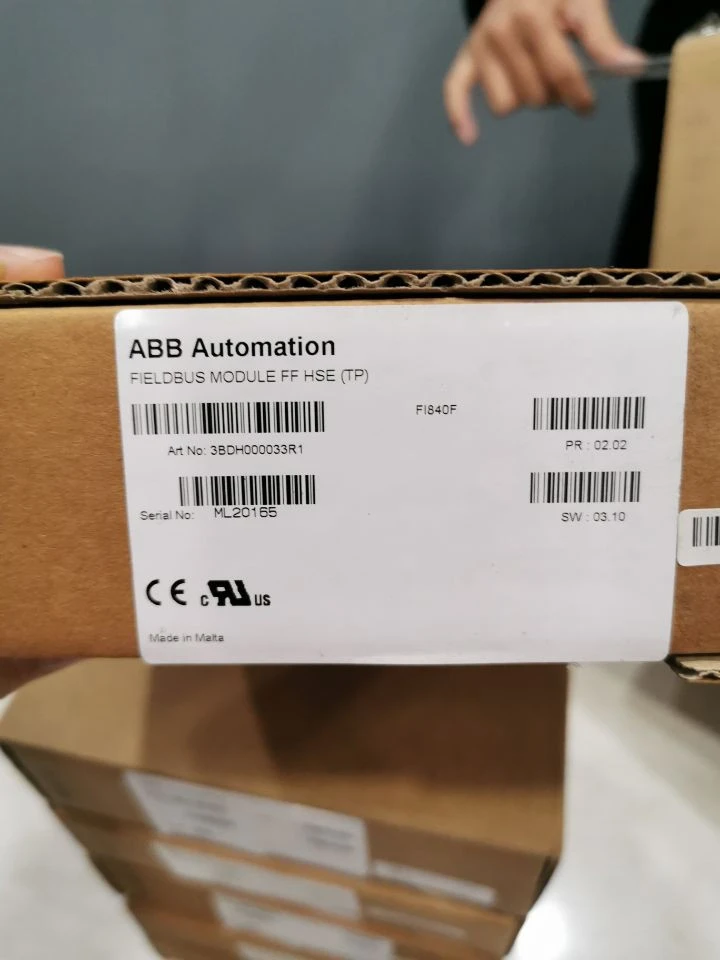
One of the great I/O modules from ABB is the ABB FI840F. It's a fieldbus module that offers reliable communication and high - performance data transfer.
Power Supplies
A reliable power supply is crucial for the proper functioning of an ABB PLC. Power supplies convert the incoming electrical power (usually from the mains) into the appropriate voltage levels required by the various components of the PLC system. ABB PLC power supplies are designed to be robust and efficient, with built - in protection mechanisms to safeguard against overvoltage, undervoltage, and short - circuits.
They ensure that the CPU, I/O modules, and other components receive a stable and clean power source. This is especially important in industrial environments where power fluctuations can be common. Without a proper power supply, the PLC may malfunction, leading to production disruptions and potential safety hazards.
Communication Modules
In today's connected world, communication is key. ABB PLCs come with various communication modules that allow them to interact with other devices and systems. Ethernet communication modules enable the PLC to connect to a local area network (LAN), making it possible to share data with other computers, servers, or other PLCs. This is useful for remote monitoring and control, as well as for integrating the PLC into a larger industrial automation system.
Fieldbus communication modules, such as the ones compatible with Profibus or Modbus, allow the PLC to communicate with field devices like sensors and actuators. They provide a standardized way to exchange data, ensuring seamless integration between different components of the industrial process.
Another interesting communication option is the ABB INNIS21. It offers advanced communication capabilities, allowing the PLC to connect to different types of networks and devices.
Chassis and Racks
Chassis and racks are used to house the various components of the ABB PLC system. They provide a physical structure that organizes and protects the CPU, I/O modules, power supplies, and communication modules. ABB offers different types of chassis and racks to accommodate different system sizes and configurations.
They are designed to be modular, which means you can easily add or remove modules as needed. This flexibility is great for scaling the PLC system as your industrial process grows or changes. The chassis also provides proper grounding and ventilation, which helps to keep the components cool and functioning properly.
Expansion Modules
Sometimes, the base configuration of an ABB PLC may not be enough to meet all the requirements of an industrial application. That's where expansion modules come in. They allow you to increase the number of I/O points, add new communication capabilities, or enhance the processing power of the PLC.
Expansion modules can be connected to the main PLC chassis through dedicated interfaces. This gives you the ability to customize the PLC system to fit your specific needs, without having to replace the entire system.
Programming Devices
To program an ABB PLC, you need a programming device. This can be a personal computer with the appropriate programming software, or a handheld programmer. The programming software allows you to create, edit, and download control programs to the PLC. It provides a graphical interface where you can use programming languages like ladder logic or function block diagrams to define the control strategy.
Handheld programmers are more portable and can be useful for on - site programming and troubleshooting. They allow you to make quick changes to the control program without having to carry a laptop around.
Conclusion
As you can see, ABB PLCs are made up of a variety of hardware components that work together to provide reliable and efficient control for industrial processes. Each component plays a crucial role in the overall functionality of the PLC system.
If you're in the market for an ABB DCS/PLC system, or if you need to upgrade your existing setup, I'm here to help. Whether you have questions about the hardware components, need advice on the right configuration for your application, or are ready to start the procurement process, don't hesitate to reach out. I can provide you with detailed information, product specifications, and pricing. Let's have a chat and see how we can make your industrial automation project a success.
References
- ABB PLC official product documentation
- Industrial automation textbooks on PLC systems